Capturing the perfect moment with an iPhone camera has become an essential part of modern photography. The iPhone camera app is designed to offer users a balance of simplicity and advanced features, making it possible for both novices and seasoned photographers to take stunning photos. Understanding how to navigate and adjust the camera settings is key to enhancing the quality of your photos. Whether you’re taking a quick snapshot or composing a more thoughtful photograph, the iPhone camera settings provide the tools needed to ensure your images stand out.
However, with the multitude of options available, users often overlook the powerful capabilities contained within their device’s camera settings. It’s not just about pointing and shooting; by mastering features like exposure adjustment, enabling the grid for better composition, and experimenting with modes like Night or Portrait, iPhone users can significantly improve the visual impact of their photography. Embracing these settings allows for more control over the lighting, focus, and overall aesthetic of your photos, transforming your phone photography experience.
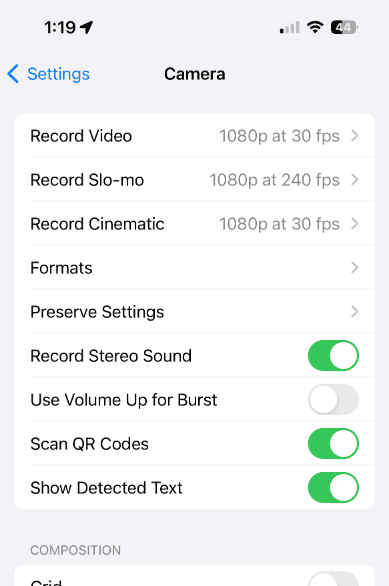
Master Your iPhone’s Camera Settings
Your iPhone has a powerful camera with many hidden settings. This guide will help you understand how to use these settings for the best photos.
⚙️ Adjusting Exposure and Focus
The iPhone sets the focus and exposure of your photos automatically. For more creative control, take charge of these settings:
📸 Essential Camera Modes
Your iPhone camera offers several modes for different situations:
🎨 Enhancing Your Photos
⚙️ Additional Settings and Controls
Take your iPhone photography skills to the next level with these settings!
iPhone Camera Concerns and Solutions
Troubleshooting iPhone Camera Black Screen Issues
A black screen on your iPhone camera can be frustrating, but there are several troubleshooting steps you may try:
iPhone 16 Camera Module Leaks: What We Know
Rumors and leaks about the iPhone 16 camera module have surfaced, suggesting potential improvements like larger sensors, enhanced low-light performance, and new zoom capabilities. However, it’s important to remember that these are just speculations until Apple officially announces the device.
Which Cell Phone Has the Best Camera?
The “best” camera phone is subjective and depends on individual preferences and needs. However, several contenders consistently rank high in reviews:
Ultimately, the best camera phone is the one that best suits your individual needs and budget.
Understanding the TrueDepth Camera
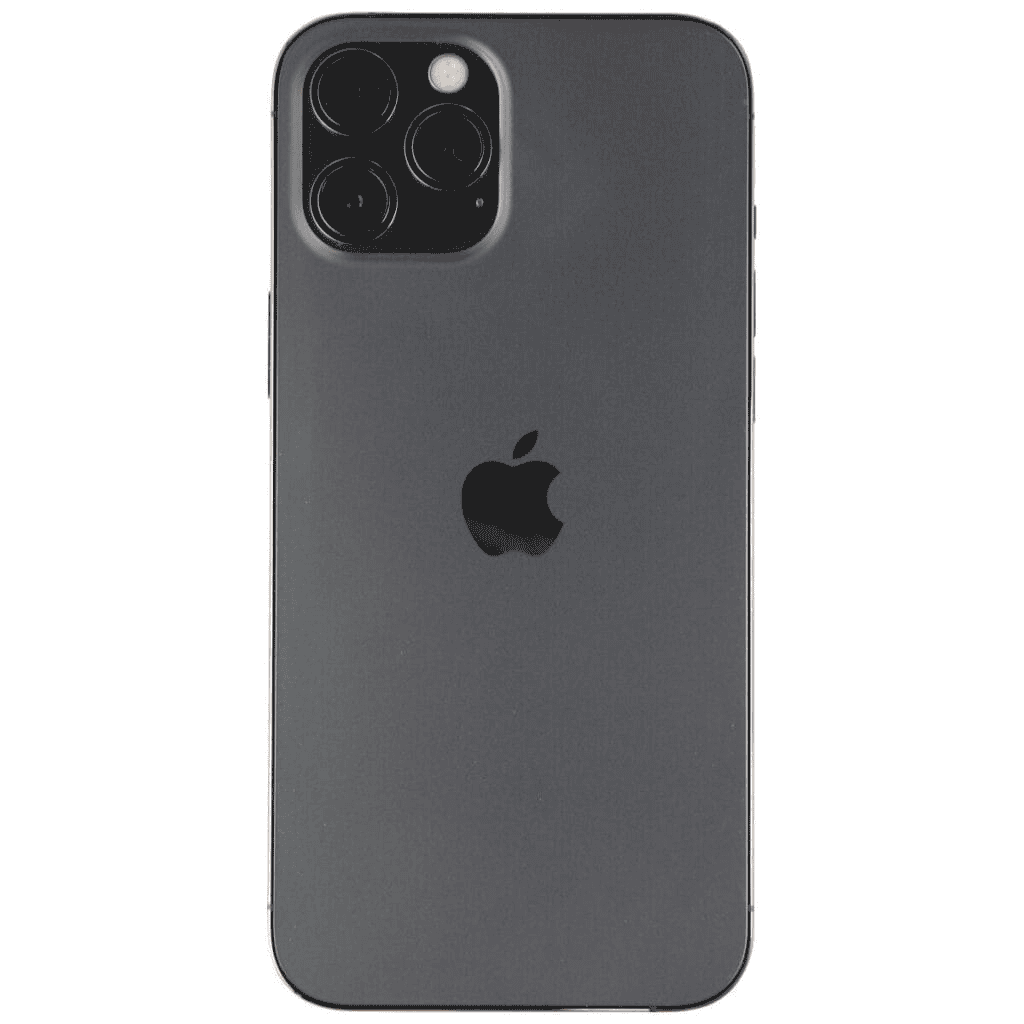
The TrueDepth camera is a complex system found on newer iPhone models that uses infrared sensors, cameras, and a dot projector to create a detailed 3D map of your face. This technology enables features like Face ID for secure authentication and Animoji/Memoji for fun and expressive communication.
iPhone XR Camera Repair Guide
If your iPhone XR camera is malfunctioning, you have a few options:
Before choosing a repair option, consider the cost, warranty coverage, and the reputation of the repair provider.
Key Takeaways
Understanding Your iPhone Camera
This section equips readers with the knowledge to make the most out of their iPhone cameras, from basic functions to advanced settings.
Exploring Camera Modes
The iPhone offers a variety ofcamera modesfor different scenarios.Photo moderemains the default, ideal for quick snapshots.Portrait modeadjusts the focus to emphasize the subject with a blurred background, whileNight modeenhances low-light photography.Macro modeallows for detailed close-ups, and for motion capture, users have options likeSlo-moandTime-lapse.Burst modeis suitable for action shots, andPanoramaoffers wide landscape captures.
Mastering Camera Settings
Effective manipulation ofcamera settingselevates photography.Exposureandfocuscan be manually adjusted by tapping the screen. TheHDRsetting brings out more detail in highlights and shadows. Users should be aware of thePreserve Settingsoption to maintain their preferred configurations.
Navigating the iPhone Camera App
TheiPhone Camera appis user-friendly, with controls forzoom,brightness, andflashaccessible on the main screen. Swiping between modes is seamless, andLive Photoscan be enabled with a simple tap. Composition tools like thegridassist with aligning shots according to therule of thirds.
Utilizing Advanced Features
Advanced users can take advantage of features likeProRAWfor more editing leeway.Portrait LightingandPhotographic Stylesadjust the mood and tone of images directly within the app.Cinematic modeon newer models like the iPhone 13 adjusts thedepth of fieldfor video with a film-like quality.
Customizing Your Photographic Experience
Personalizing the camera experience involves settingPhotographic Stylesand choosingfilters. Theaspect ratiocan be changed to4:3,16:9, orSquaredepending on the subject matter. Within the settings, features likelens correctionand the option toview outside the framecan also be toggled.
Tips for Professional-Looking Shots
For professional-grade photos, consider the following: usenatural lightwhen possible, employ thezoomfunction sparingly to preserve image quality, and utilizePortrait modeto bring out themain subject. Familiarize yourself withiPhone lensesand their strengths, from wide-angle to telephoto.
Camera Hardware Insights
Understanding the iPhone’scamera hardwareis crucial. The iPhone 13, for example, boasts adual or triple-lens systemthat significantly improvesdepth of fieldand low-light performance. Thefront cameraalso supportsPortrait modeandPortrait Lighting, adding versatility in capturing selfies with professional effects.
Capturing and Enhancing Your Photos
The iPhone’s camera app equips users with settings and tools for taking vibrant photos and editing them with ease. Here’s how to leverage these features for superior image capturing and post-shot adjustments.
Taking Amazing Photos
To take outstanding photos, start by optimizing your iPhone camera settings. Composition can be enhanced by enabling the grid setting to align shots using the Rule of Thirds. For sharp focus and optimal exposure, tap the subject on your screen and adjust the exposure slider as needed. Experiment with various photo modes like Portrait mode for depth of field, and use Burst mode by holding down the shutter button to capture action shots. Flip to the front camera with a swipe for spontaneous selfies.
Editing Like a Pro
The iPhone camera app offers a rich set of editing tools. Adjust brightness levels and apply filters to enhance mood. Smart HDR can be toggled for high-dynamic-range imaging, and Photographic Styles personalize shots with predefined color and contrast settings. For users who desire control over their edits, Apple ProRAW format supports extensive adjustments without losing image quality.
Sharing and Managing Your Creations
After capturing and editing photos, manage them directly within the Photos app. Create albums for organization, and utilize the share sheet to distribute images via email, messages, or social media. iCloud Photo Library can store photos and keep them synced across all devices.
Getting the Most From Your Selfies
Selfies stand out with the right settings: Portrait mode brings forward faces with background blur, and Portrait Lighting adjusts for studio-quality effects. Don’t forget to use the timer function for hands-free shots. The front camera also supports Night mode, ensuring clarity even in low light.
Exploring Video Capabilities
Turn your iPhone into a powerful video camera. Record video in stunning 4k resolution, and apply Slo-mo for dramatic effect. Cinematic mode tracks movement and shifts focus smoothly, much like professional-grade cameras. Video settings are adjustable, including frame rate and resolution, from the Settings app under the Camera section.
Frequently Asked Questions
To capture the full potential of iPhone photography, adjusting camera settings to their optimum values is essential. This section addresses common inquiries about camera settings on the iPhone, guiding users toward taking better photos.
How can I adjust my iPhone camera settings for optimal photo quality?
For the best photo quality, set your iPhone’s camera resolution at the highest available megapixels and ensure HDR is on. Also, adjust exposure by tapping the screen and dragging the sun icon, and use the manual focus by holding down on the desired area until the AE/AF Lock is set.
What are the essential camera functions available on an iPhone?
iPhones generally offer functions such as zoom, burst mode, live photos, panoramas, and portrait mode. Adjustable settings include exposure, focus, HDR, filters, and the use of grid lines for framing.
How do I reset my iPhone camera settings to their default values?
To reset camera settings, navigate to the Settings app, tap ‘Camera’, and select ‘Reset Settings’. This will restore all settings to factory defaults.
What settings should I use on my iPhone camera to achieve professional-looking photographs?
Professional-looking photos can be achieved by using correct focus and exposure settings, enabling the grid for composed shots, and making good use of portrait mode for depth-of-field effects. Experiment with third-party apps for more control.
Are there any specific camera settings recommended for newer iPhone models like the iPhone 14?
On newer models such as the iPhone 14, utilize the Photonic Engine and ProRAW features for detailed images, and tap into higher resolution settings where available. Use Pro mode for more creative control.
How can I troubleshoot issues with my iPhone camera settings not working correctly?
Restart your iPhone first. If issues persist, check for iOS updates or reset your camera settings. Consult Apple Support if problems are not resolved by these steps.
