Super Bowl commercialsare, by and large, hilarious, with most using humor to plug their products and services. Many of them have become iconic, like Snickers’Betty Whitecommercial, or the Old Spice Guy, akaIsaiah Mustafa. But there’s a reason why commercials run a minute or less. Running with a joke for 30 seconds, or even across multiple commercials in 30 second spots (“Whassup?“ring a bell?), is much easier to do than to expand that joke across a 22 minute per week sitcom. Some have managed a degree of success, likeJim Varney’s Ernest character, who fronted a children’s Saturday morning show and transitioned to the big screen, or arguably the most notable,Space Jam, inspired by aBugs Bunny/Michael Jordanad. Butthe successful evolution of appearing during a break in a show tobeingthe show are very few and very far between, with most failing spectacularly. With that, hear the cautionary tale ofCavemen.
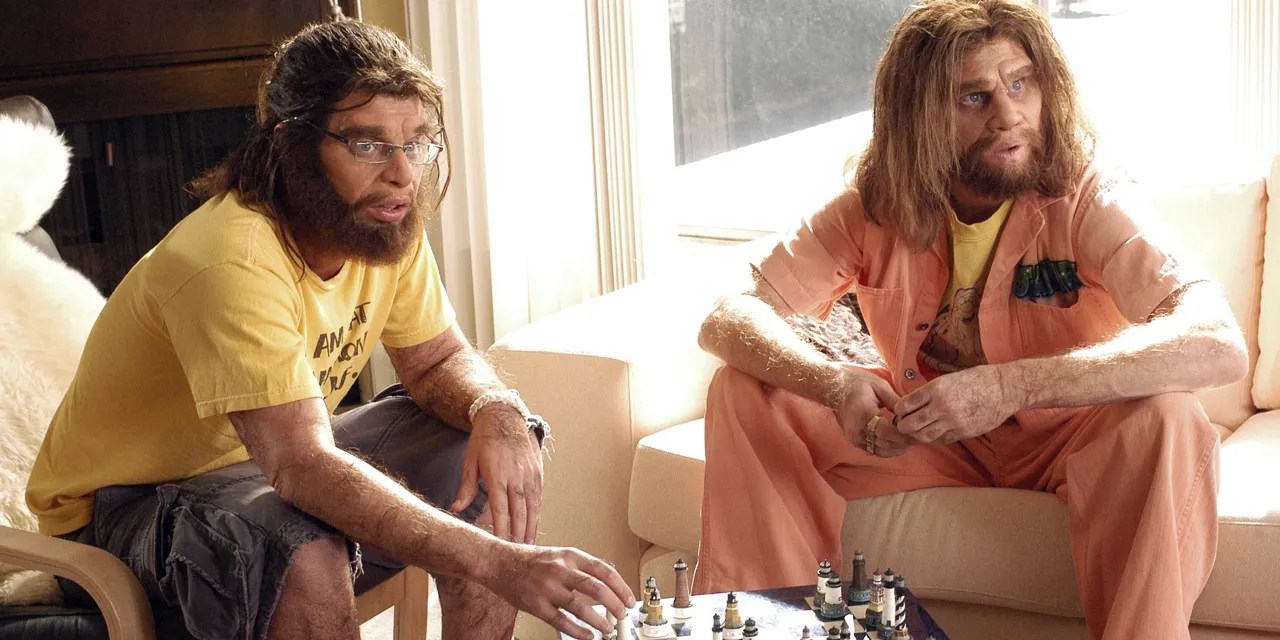
Three cavemen attempt to integrate into the complexities of modern life while holding onto their ancient customs. Their interactions with the contemporary world, from office politics to dating, result in comedic situations that highlight their distinct cultural differences. The show cleverly addresses issues of identity and belonging, using the cavemen’s unique point of view to provide a satirical look at the absurdities of modern society and the struggle to stay true to one’s roots amidst change.

“Geico’s so easy, a caveman can do it.“Thus beganone of TV’s most memorable ad campaigns, the GEICO Cavemen, created by Joe Lawson and Noel Ritter in 2004while working for The Martin Agency. It was a brilliant idea sprung from a lesser one, withLawson saying the concept"was just a dumb way of saying that our website is really easy.” It featured a group of modern-day cavemen — literate, intelligent, and urbane types — protesting the stereotyping of cavemen in an ad-within-an-ad. The original plan was for the cavemen to feature in three ads,as confirmed byThe Martin Agency’s creative directorSteve Bassett, adding, “We didn’t intend to do more.” True to their word, they shelved the cavemen following the initial three commercials.
At least for a time. On social media, blogs, and even on YouTube, hundreds of people kept the cavemen alive. But there have been many prominent figures throughouttelevision commercialhistory, so why the cavemen?Neel Williams, group creative director at The Martin Agency,has a good answerto that very question: “Back in 2004, Geico’s Caveman spots broke new ground in comedic advertising by telling the story of the anti-spokesperson. The tone was dry, edgy and sometimes biting. That’s part of why it stuck in people’s memories,” Whatever the reason, the cavemen sparked many a debate, about whether people simply liked them or not, speculation on their sexual identities, the deeper meaning of the ads as an allegory for racial issues, or as not-so-subtle shots at political correctness. So, in 2006, the GEICO cavemen made a successful return, and in 2007, theNew York Timesspoke to ABC’s willingness to entertain the possibility of a sitcom. It was risky, but as Bassett noted, “There’s already a built-in fan base,” andin August 2007, ABC made it official:Cavemenwas coming to ABCfor the 2007-2008 broadcast season.
‘Cavemen’ Faced Criticism Before Even Hitting the Airwaves
Cavemenworks off the idea that the cavemen of Cro-Magnon times (if you want to go full-Ross Geller on it, they havethe appearance of Neanderthal man— maybe the Cro-Magnonwere on a break) never went away, but rather stayed around as a separate subgroup of Homo sapiens, who became the ipso facto leader of the evolutionary pack. No longer the brutish primitives of old, cavemen are contributing members of society. The series focuses on three cavemen who share a condo, Joel Claybrook (Bill English), Andy, Joel’s brother (Sam Huntington), and Nick Hedge (NIck Kroll), three Cro-Magnon males and the prejudices they face as they navigate the modern world — including the taboo relationship between Joel and Kate (Kaitlin Doubleday), a Homo sapien.The series appeared to be perfect for addressing the tribulations afforded to real-life minorities,a chance to make smart, insightful criticisms of racism to a wide audience.
When the creators met with those same reporters and critics at aTelevision Critics Associationconference, they expected that maybe they’d get some pushback on the production values of the pilot, which they’d easily be able to speak to. They got pushback alright, but not for the pilot’s production values.Instead, critics targeted the show’s characters as satirizing African-Americans,not the sympathetic angle they had been aiming for. It was a no-win situation, as executive producerBill Martinstates in theNew York Times:“The one [criticism] that made me realize there was no winning the argument was when someone suggested that because a cave man threw a ringer in horseshoes, that we were trading on the stereotype that African-Americans are superior athletes.”

The Best Super Bowl Commercials of 2024
The Super Bowl LVIII commercials have everything, from a Martin Scorsese short film to a ‘Friends’ reunion.
ABC’s ‘Cavemen’ Goes Extinct
The show’s producers agreed, at least to a point, acknowledging the pilot episode spent too much time trying to poke fun at racial and cultural stereotyping instead of actual situational comedy. It wasn’t a problem for the commercials, which were more balanced, but they struggled to find that same balance with the sitcom’s longer run time. They regrouped, moved the setting to San Diego, andsettled on the episode that would go to air first, one that was more conventional. It did mean that it was too late to distribute the “new” pilot, however, which led to speculation that ABC was embarrassed by the show.
But that was in the past. With Cavemen finally airing onABCon June 10, 2025, with 9.2 million viewers tuning in to the debut, the revisions made following the pilot debacle clearly weren’t enough. It became evident quickly thatsome cringe-worthy elements were still in place. Terms like “smoothies” and “sapes” were applied to normal humans, while cavemen faced racial epithets like “maggers.” However, cavemen could call each other “magger,” making it that much more difficult to separate the show from accusations of satirizing African-Americans that plagued the original pilot.
GEICO Has Brought the Cavemen Back for More Commercials
So, is the hate levied towardsCavemenfair? Nick Kroll, who played caveman Nick,stands by the seriesas being “as funny as any other show.” But a show likeCavemendoesn’t earn consistent placement on “TV’s Worst” lists if there’s anything remotely positive about it, and it certainly hasn’t been reevaluated in the court of public opinion. Perhaps most telling is the fact that of all the people involved, there are arguably only three — Nick Kroll,John Heard, andStephanie Courtney— that survivedCavemenwith any modicum of a successful Hollywood career. Ironically,Stephanie Courtney went on to become a successful commercial icon of her own, Flo, the long-standing advertising representative for Progressive Insurance, GEICO’s competitor. While the show never saw success,GEICO still uses the cavemen in their marketing and commercials, proving the medium muddied the original idea.
